


Polyethersulfone Resin (PES) is a high-performance engineering thermoplastic known for its excellent heat resistance, mechanical strength, dimensional stability, and chemical resistance. As an advanced engineering plastic, PES is widely used in applications that require reliable performance under high temperatures, demanding mechanical conditions, and repeated exposure to hot water or steam.
PES Engineering Plastic combines outstanding thermal stability with good electrical insulation and hydrolysis resistance, making it a suitable material for electronics, automotive components, medical equipment, water filtration systems, and industrial machinery.
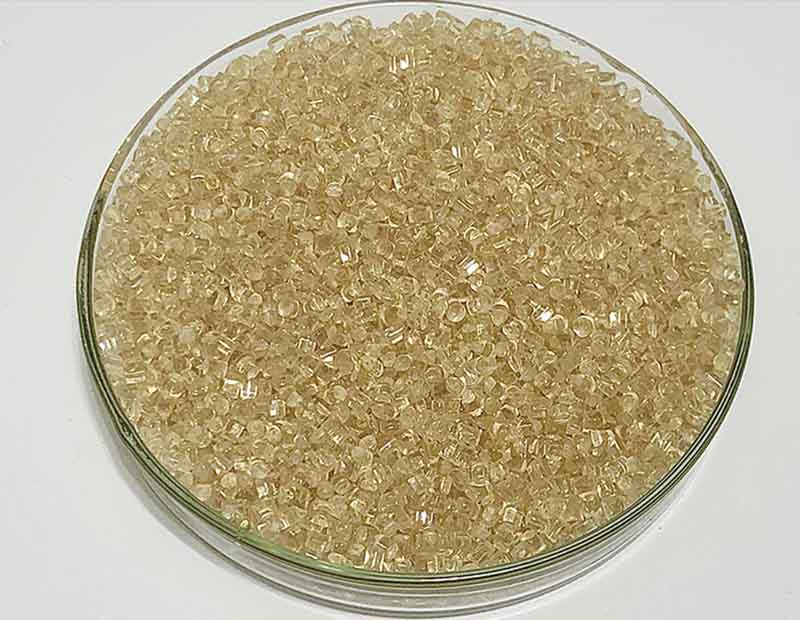
Compared with conventional engineering plastics, High-Performance PES Resin can maintain its mechanical properties and structural stability in demanding operating environments. Its natural transparent amber appearance also makes it useful for applications where visual inspection of internal components is important.
For manufacturers seeking reliable High-Temperature Resistant Plastic, PES Thermoplastic Resin offers a balanced combination of thermal performance, mechanical properties, and processing flexibility.
What Is Polyethersulfone Resin?
Polyethersulfone Resin (PES) is an amorphous high-performance thermoplastic polymer containing aromatic ether and sulfone groups in its molecular structure. These molecular characteristics contribute to its excellent thermal stability, mechanical strength, and resistance to hydrolysis.
PES is generally available as natural amber-colored resin and can be processed through injection molding, extrusion, and other thermoplastic manufacturing methods.
One of its most important characteristics is its high glass transition temperature, typically around 225°C. This allows PES Material to retain its mechanical properties under elevated temperatures compared with many conventional engineering plastics.
Because of its combination of heat resistance, dimensional stability, and electrical insulation, PES is widely recognized as a High-performance Thermoplastic for demanding industrial applications.
Key Properties of PES Engineering Plastic
Excellent High-Temperature Resistance
Heat resistance is one of the most important advantages of PES Engineering Plastic. With a glass transition temperature of approximately 225°C, PES maintains good stiffness and dimensional stability under elevated temperatures.
This makes it suitable for components exposed to continuous heat, hot water, steam, and demanding thermal conditions. Actual continuous service temperatures depend on the resin grade, mechanical loading, and operating environment.
High Mechanical Strength and Rigidity
High-Performance PES Resin offers excellent stiffness, tensile strength, and creep resistance. These properties help components maintain their shape and mechanical performance under long-term loading.
It is particularly useful for precision components, electrical housings, structural parts, and industrial equipment.
Excellent Hydrolysis Resistance
PES Thermoplastic Resin provides good resistance to hydrolysis and can withstand repeated exposure to hot water and steam under appropriate conditions.
This property makes it suitable for medical equipment, sterilization components, filtration systems, and fluid handling applications.
Good Chemical Resistance
PES Material demonstrates resistance to many acids, alkalis, and aqueous solutions. However, its compatibility with organic solvents and certain aggressive chemicals should be carefully evaluated.
Chemical resistance depends on concentration, temperature, exposure time, and the specific resin grade.
Reliable Electrical Insulation
PES is an excellent electrical insulating material with good dielectric properties and thermal stability.
These characteristics make PES Engineering Plastic suitable for electronic components, electrical connectors, insulating parts, and high-temperature electrical equipment.
Dimensional Stability and Transparency
As an amorphous thermoplastic, PES offers good dimensional stability and relatively low molding shrinkage. Its natural amber transparency also allows visual inspection in selected applications, including fluid handling and filtration equipment.
PES Thermoplastic Resin: Technical Properties
The following table summarizes the typical characteristics of unfilled Polyethersulfone Resin. Actual values may vary depending on the manufacturer, resin grade, and testing conditions.
Property | Typical Characteristics |
|---|---|
Material | Polyethersulfone (PES) |
Polymer Type | Amorphous Thermoplastic |
Appearance | Transparent Amber |
Glass Transition Temperature | Approximately 225°C |
Heat Resistance | Excellent |
Mechanical Strength | High |
Rigidity | High |
Hydrolysis Resistance | Excellent |
Chemical Resistance | Good against many aqueous chemicals |
Electrical Insulation | Excellent |
Dimensional Stability | Excellent |
Processing Methods | Injection Molding, Extrusion |
For precise material selection, always refer to the manufacturer's technical data sheet (TDS) and processing guidelines.
PES Polymer Applications Across Different Industries
Thanks to its excellent thermal and mechanical properties, PES Polymer is widely used in industries where ordinary plastics may not provide sufficient performance.
High-Temperature Plastic for Electronics
PES is an ideal candidate for selected electronic applications requiring reliable insulation, dimensional stability, and resistance to elevated temperatures.
Common applications include:
Electrical connectors and insulating components
Electronic equipment housings
Coil bobbins and motor components
Precision electrical parts
High-temperature electronic assemblies
Its combination of thermal stability and electrical insulation makes PES a valuable High-Temperature Plastic for Electronics, particularly in equipment exposed to repeated temperature changes.
Medical Devices and Healthcare Equipment
PES is widely used in medical and healthcare equipment because of its heat resistance, hydrolysis resistance, and ability to withstand certain sterilization processes.
Typical applications include:
Medical instrument components
Sterilization equipment
Dialysis and filtration components
Medical fluid handling systems
Laboratory equipment
For medical applications, manufacturers should select appropriate medical-grade PES materials with verified biocompatibility, sterilization compatibility, and regulatory documentation.
Water Treatment and Filtration Systems
PES is particularly important in membrane filtration technology. Its chemical structure and processing characteristics make it suitable for manufacturing filtration membranes with controlled pore structures.
Typical applications include:
Ultrafiltration membranes
Water purification systems
Industrial filtration equipment
Pharmaceutical filtration
Food and beverage processing filtration
PES membranes are valued for their filtration performance, thermal stability, and compatibility with various aqueous filtration environments.
Automotive and Transportation Industry
In automotive applications, PES can be used for components exposed to elevated temperatures, mechanical stress, and demanding operating conditions.
Potential applications include electrical connectors, sensor housings, precision components, and selected under-hood parts.
Its dimensional stability and heat resistance help maintain component reliability in challenging environments.
Industrial Machinery and Equipment
PES Engineering Plastic is also suitable for industrial equipment requiring long-term dimensional stability and resistance to thermal deformation.
It can be used in precision mechanical components, pump parts, fluid handling systems, and equipment exposed to hot water or steam.
PES vs. PSU vs. PPSU: What Are the Differences?
PES, PSU, and PPSU belong to the sulfone polymer family. Although they share similar characteristics, their thermal and mechanical properties differ.
Material | Glass Transition Temperature | Main Advantages | Typical Applications |
|---|---|---|---|
PES | Approximately 225°C | High heat resistance, stiffness, hydrolysis resistance | Filtration membranes, electronics, medical equipment |
PSU | Approximately 185°C | Transparency, dimensional stability, good heat resistance | Medical devices, water systems, electrical components |
PPSU | Approximately 220°C | Excellent impact resistance and steam sterilization performance | Surgical instruments, medical equipment |
PES is particularly suitable for applications requiring high thermal stability and stiffness. PSU offers a good balance of transparency, mechanical performance, and heat resistance, while PPSU is often preferred when high impact resistance and repeated steam sterilization are essential.
The final selection should be based on the specific application, operating conditions, and required material certifications.
PES Material vs. Conventional Engineering Plastics
Why choose PES instead of ordinary engineering plastics?
Comparison | PES Engineering Plastic | Conventional Engineering Plastics |
|---|---|---|
Heat Resistance | Very High | Generally Lower |
Mechanical Strength | High | Varies by material |
Dimensional Stability | Excellent | Varies by material |
Hydrolysis Resistance | Excellent | Depends on polymer type |
Electrical Insulation | Excellent | Generally Good |
Processing Cost | Relatively High | Generally Lower |
Typical Applications | High-temperature industrial and electronic components | General industrial and consumer products |
Although PES usually has a higher material cost than conventional plastics, its thermal stability and long-term performance can make it a cost-effective option for demanding applications.
How to Choose the Right High-Performance PES Resin?
Selecting the right PES Material requires understanding the operating environment, component design, and manufacturing process.
1. Evaluate Operating Temperature
Determine the continuous operating temperature and any short-term temperature peaks. Consider both the resin's thermal properties and the actual mechanical load during operation.
2. Check Mechanical Requirements
Evaluate tensile strength, impact resistance, stiffness, creep resistance, and dimensional stability according to the component's structural requirements.
3. Consider Chemical Exposure
Identify the chemicals, cleaning agents, oils, and fluids that may contact the finished component. Conduct compatibility testing when exposure involves aggressive solvents or elevated temperatures.
4. Confirm Electrical Performance
For electronic and electrical applications, check dielectric strength, volume resistivity, insulation performance, and relevant safety requirements.
5. Select the Appropriate Processing Grade
Different PES grades may be designed for injection molding, extrusion, or membrane production. Confirm melt flow characteristics, drying conditions, and processing recommendations with your PES Material Supplier.
Frequently Asked Questions About Polyethersulfone Resin
1. What Is Polyethersulfone Resin Used For?
Polyethersulfone Resin is used in high-performance applications such as electronic components, medical equipment, filtration membranes, automotive parts, and industrial machinery. It is particularly suitable for environments requiring high heat resistance, mechanical strength, and hydrolysis resistance.
2. What Is the Difference Between PES and PSU?
PES and PSU are both high-performance sulfone thermoplastics, but they have different molecular structures and thermal properties. PES typically has a glass transition temperature of approximately 225°C, while PSU is approximately 185°C. PES generally offers higher thermal stability.
3. Is PES a High-Temperature Plastic?
Yes. PES is considered a high-temperature engineering thermoplastic. Its high glass transition temperature, approximately 225°C, allows it to maintain good mechanical properties under elevated temperatures. However, the maximum continuous service temperature depends on the specific grade and application conditions.
4. Is PES Suitable for Electronic Components?
Yes. PES offers excellent electrical insulation, thermal stability, and dimensional stability, making it suitable for connectors, insulating components, electronic housings, and other high-temperature electrical applications.
5. Is PES Resistant to Hot Water and Steam?
Yes. PES offers excellent hydrolysis resistance and can withstand repeated exposure to hot water and steam under suitable conditions. This makes it useful for medical equipment, filtration systems, and sterilization-related applications.
6. Can PES Resin Be Injection Molded?
Yes. PES Thermoplastic Resin can be processed through injection molding and extrusion. Proper drying, temperature control, and mold design are important to achieve consistent component quality.
7. What Is the Difference Between PES and PEEK?
Both PES and PEEK are high-performance engineering thermoplastics. PEEK generally offers higher mechanical strength, wear resistance, and continuous service temperature, while PES provides excellent thermal stability, electrical insulation, and hydrolysis resistance. Material selection depends on performance requirements and budget.
Choose a Reliable PES Material Supplier
Choosing a reliable PES Material Supplier is essential for maintaining consistent material quality and achieving stable manufacturing performance.
High-Performance PES Resin provides an excellent combination of thermal stability, mechanical strength, electrical insulation, and hydrolysis resistance. It is suitable for manufacturers developing precision components for electronics, medical equipment, filtration systems, automotive applications, and industrial machinery.
When sourcing Polyethersulfone Resin, consider the supplier's material specifications, technical data sheets, quality control procedures, processing recommendations, and availability of customized resin grades.
Whether you need PES Engineering Plastic for high-temperature electronic components or PES Thermoplastic Resin for industrial applications, selecting the right material grade can help improve product reliability and service life.
Contact us today to discuss your PES resin requirements and find a suitable high-performance thermoplastic solution for your manufacturing projects.