


peek plastic is made from a High-performance thermoplastic polymer known as polyether ether ketone. It consists primarily of carbon, hydrogen, and oxygen atoms arranged in a stable molecular structure containing aromatic rings, ether bonds, and ketone groups. This unique chemical structure gives PEEK plastic excellent mechanical strength, high-temperature resistance, chemical resistance, and dimensional stability.
As a high-performance engineering plastic, PEEK is widely used in aerospace, automotive, medical equipment, electronics, and precision manufacturing. Understanding what PEEK plastic is made of helps engineers and manufacturers determine whether this material is suitable for demanding applications that require reliable performance under heat, stress, and chemical exposure.
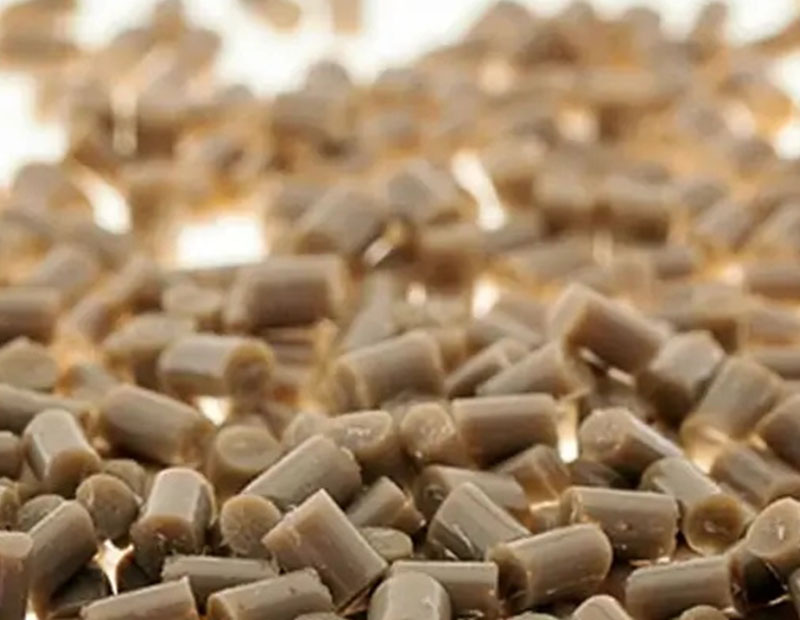
What Is PEEK Plastic?
PEEK stands for polyether ether ketone. It is a semi-crystalline thermoplastic belonging to the polyaryletherketone (PAEK) family of engineering polymers.
Unlike conventional plastics such as ABS and polypropylene, PEEK is designed for applications that require a combination of high mechanical performance, thermal stability, and chemical resistance. It can be processed using specialized thermoplastic manufacturing techniques, including injection molding, extrusion, and CNC machining of PEEK stock shaPES.
PEEK plastic is available in different grades, including unfilled natural PEEK and reinforced grades containing materials such as glass fiber or carbon fiber. These variations allow manufacturers to tailor stiffness, strength, wear resistance, and dimensional stability to specific applications.
What Is PEEK Plastic Made Of Chemically?
PEEK plastic is primarily composed of three chemical elements: carbon, hydrogen, and oxygen. These elements form repeating molecular units that create the polymer's characteristic structure.
Carbon (C)
Carbon forms the backbone of the PEEK polymer chain. Its arrangement within aromatic rings contributes to the material's rigidity, mechanical strength, and resistance to thermal degradation.
Hydrogen (H)
Hydrogen atoms are attached to the carbon atoms in the polymer structure. Although hydrogen is a relatively small component of the molecular framework, it is essential to the chemical composition of PEEK.
Oxygen (O)
Oxygen atoms form ether linkages and ketone groups within the polymer chain. These oxygen-containing groups contribute to the structure and properties that distinguish PEEK from many other engineering plastics.
The combination of these elements produces a polymer with a repeating chemical unit commonly represented by the molecular formula ((C_{19}H_{12}O_3)_n), where (n) represents the number of repeating units in the polymer chain.
How Does the Molecular Structure of PEEK Affect Its Properties?
The chemical composition of PEEK is closely connected to its performance in industrial applications. Three important structural features contribute to its distinctive properties.
Aromatic Rings
Aromatic rings are stable ring-shaped molecular structures within the polymer backbone. They help create a rigid molecular framework, contributing to PEEK's mechanical strength, stiffness, and thermal stability.
Ether Bonds
Ether bonds connect parts of the polymer chain through oxygen atoms. They provide a balance between structural rigidity and molecular flexibility, helping PEEK maintain useful mechanical properties under demanding operating conditions.
Ketone Groups
Ketone groups contain a carbon atom double-bonded to an oxygen atom. Their presence contributes to the polymer's polarity and overall molecular structure, helping distinguish PEEK from other high-performance thermoplastics.
Together, these structural components allow PEEK to combine high strength, wear resistance, and heat resistance in a single engineering material.
How Is PEEK Plastic Manufactured?
PEEK plastic is produced through a controlled chemical polymerization process that creates its repeating molecular structure. Industrial production generally involves reacting suitable aromatic chemical compounds under carefully controlled conditions to form the polyether ether ketone polymer.
After polymerization, the material can be processed into pellets, sheets, rods, tubes, and other stock shapes. These forms are then used in manufacturing processes such as injection molding, extrusion, compression molding, and precision machining.
The final properties of a PEEK product depend on several factors, including polymer grade, processing conditions, crystallinity, additives, and reinforcement materials.
For example, carbon-fiber-reinforced PEEK contains additional carbon fibers to improve selected mechanical properties, while glass-fiber-reinforced PEEK is used when increased stiffness and dimensional stability are required. These reinforced grades differ from unfilled PEEK in composition and performance.
What Are the Main Properties of PEEK Plastic?
PEEK plastic is recognized as a high-performance engineering material because of its combination of thermal, mechanical, and chemical properties.
High-Temperature Resistance
PEEK has a melting temperature of approximately 343°C and a glass transition temperature of approximately 143°C. Its long-term service temperature is commonly around 250°C for suitable grades under appropriate conditions.
These properties make PEEK suitable for components exposed to elevated temperatures, although the actual operating limit depends on the grade, load, environment, and product design.
Excellent Mechanical Strength
PEEK offers high strength, stiffness, and fatigue resistance compared with many conventional thermoplastics. It is used for precision components that must maintain their mechanical performance during repeated loading or demanding operating cycles.
Chemical Resistance
PEEK resists many oils, fuels, solvents, and industrial chemicals. However, its compatibility is not universal and should be evaluated for the specific chemical, concentration, temperature, and exposure duration.
Wear and Friction Performance
PEEK can provide good wear resistance and relatively low friction in suitable designs. Reinforced or modified grades may offer improved performance for bearings, bushings, gears, and other moving components.
Dimensional Stability
PEEK maintains useful dimensional stability under a range of operating conditions. This characteristic makes it attractive for precision-machined parts and components requiring consistent dimensions.
What Is PEEK Plastic Used For?
Because of its chemical structure and performance characteristics, PEEK plastic is used in a variety of industries.
Aerospace and Automotive Components
PEEK is used in selected aerospace and automotive applications where high strength, reduced weight, and thermal resistance are important. Typical components may include bushings, seals, connectors, and specialized structural parts.
Medical Equipment and Devices
Certain PEEK grades are used in medical instruments and medical-device components. Specialized implant-grade PEEK may also be used in specific implant applications, subject to the required biocompatibility evaluation, regulatory approvals, and manufacturing controls.
Industrial Machinery
PEEK is commonly used to manufacture precision gears, bearings, valve components, wear rings, and other parts exposed to mechanical loads, friction, or elevated temperatures.
Electronics and Electrical Equipment
PEEK's thermal stability and electrical insulation properties make it suitable for selected connectors, insulating components, and precision electronic parts.
Chemical Processing Equipment
In appropriate grades and designs, PEEK can be used for seals, pump components, and other parts exposed to demanding chemical environments. Material compatibility must be confirmed before use.
PEEK Plastic vs. Other Engineering Plastics
PEEK is often compared with more economical engineering plastics when selecting materials for industrial components.
| Property | PEEK | POM | Nylon (PA) | ABS |
|---|---|---|---|---|
| Heat resistance | Excellent | Moderate | Grade-dependent | Generally lower |
| Mechanical strength | High | Good | Good to high | Moderate |
| Chemical resistance | Excellent against many chemicals | Good for selected chemicals | Grade-dependent | More limited in some environments |
| Wear resistance | Good to excellent, depending on grade | Good | Good | Application-dependent |
| Material cost | Very high | Moderate | Low to moderate | Low to moderate |
| Typical applications | High-performance industrial components | Gears and precision parts | Mechanical components and bushings | Housings and general-purpose parts |
PEEK is not necessarily the best choice for every application. For components operating at moderate temperatures and loads, POM, nylon, or ABS may offer sufficient performance at a lower cost. PEEK is most valuable when its specialized properties justify the additional material and processing costs.
How to Choose the Right PEEK Plastic Grade
Selecting the right PEEK Material requires evaluating the application's actual operating conditions.
Unfilled PEEK: Suitable for applications requiring a balanced combination of strength, chemical resistance, and electrical insulation.
Carbon-fiber-reinforced PEEK: Often selected for increased stiffness, improved load-bearing performance, and reduced thermal expansion.
Glass-fiber-reinforced PEEK: Suitable for applications requiring greater stiffness and dimensional stability.
Wear-modified PEEK: Designed for selected sliding or friction-related applications where improved wear performance is required.
When sourcing PEEK plastic, manufacturers should also consider operating temperature, mechanical loads, chemical exposure, dimensional tolerances, machining requirements, and total production cost.
For CNC-machined PEEK parts, material selection should be coordinated with the component's geometry, required surface finish, and dimensional accuracy.
Frequently Asked Questions
Is PEEK plastic made from petroleum?
Commercial PEEK is generally produced using industrial chemical feedstocks derived from petrochemical supply chains. These feedstocks undergo chemical reactions to form the polymer. The exact raw materials and production route depend on the manufacturer's process.
Is PEEK a thermoplastic or a thermosetting plastic?
PEEK is a semi-crystalline thermoplastic. It can be softened by heating and processed into different shapes using suitable manufacturing methods. Unlike thermosetting plastics, it does not rely on an irreversible curing reaction to form its basic polymer structure.
Is PEEK plastic stronger than metal?
PEEK can offer an excellent strength-to-weight ratio, but it does not generally match the absolute strength or stiffness of structural metals such as steel. Its advantages include lower weight, corrosion resistance, and useful wear and chemical properties. Reinforced PEEK grades can improve performance for selected applications.
Can PEEK plastic be CNC machined?
Yes. PEEK is widely used for CNC machining. It can be machined into custom components such as bushings, seals, gears, spacers, and precision housings. Appropriate cutting tools, machining parameters, and dimensional controls are important for achieving the required quality.
Why is PEEK plastic expensive?
PEEK requires specialized raw materials, controlled polymerization, and demanding processing conditions. Its high-performance properties and relatively complex manufacturing process generally make it more expensive than conventional engineering plastics.
PEEK plastic is made from carbon, hydrogen, and oxygen atoms arranged in a repeating polymer structure containing aromatic rings, ether bonds, and ketone groups. This molecular structure gives polyether ether ketone its combination of high-temperature resistance, mechanical strength, chemical resistance, and dimensional stability.
For engineers and manufacturers, understanding what PEEK plastic is made of provides a foundation for selecting the right material grade for aerospace components, medical devices, industrial machinery, electronics, and precision CNC-machined parts. By matching the material's properties to the application's actual requirements, businesses can balance performance, reliability, and cost.