


Yes, polyethylene is a type of plastic, but not all plastics are polyethylene. Plastic is a broad category of polymer-based materials, while polyethylene, commonly abbreviated as PE, is one specific family of thermoplastic polymers.
It is also important to distinguish polyethylene from Polyetherimide (PEI). Although their names are similar, they are very different engineering materials. Polyethylene is widely used for packaging, containers, piPES, films, and everyday plastic products, while PEI is a High-performance thermoplastic designed for demanding applications requiring high temperature resistance, mechanical strength, dimensional stability, and electrical insulation.
What Is the Difference Between Polyethylene and Plastic?
The word plastic describes a broad group of materials made primarily from polymers. Polyethylene is one member of this large group.
Other common plastics include:
Polypropylene (PP)
Polyvinyl chloride (PVC)
Polystyrene (PS)
Polycarbonate (PC)
Polyamide (PA)
Polyetherimide (PEI)
Polyether ether ketone (PEEK)
Therefore, polyethylene is plastic, but plastic is not synonymous with polyethylene.
The difference becomes particularly important when selecting materials for engineering applications. General-purpose plastics may be sufficient for everyday products, while specialized applications may require high-performance polymers such as PEI.
What Is Polyetherimide Plastic Material?
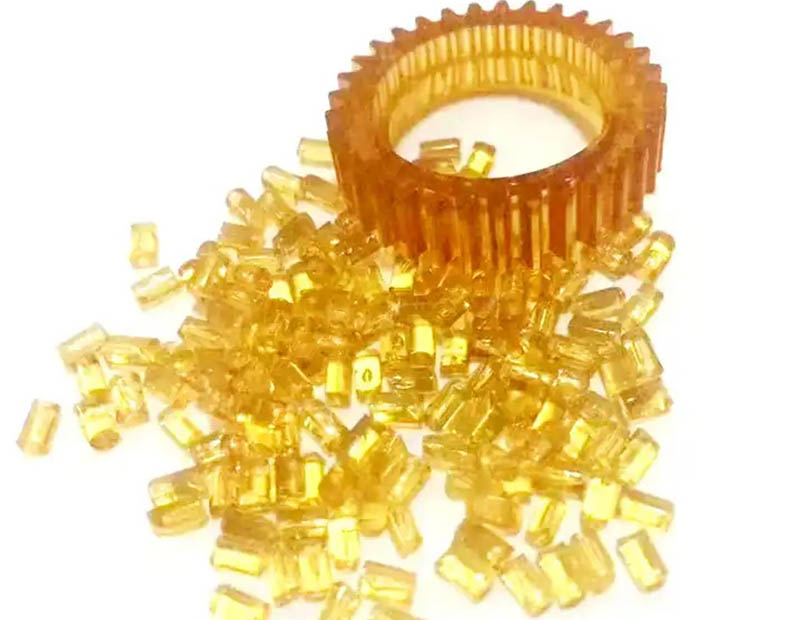
Polyetherimide Plastic Material, commonly known as PEI, is an amorphous high-performance thermoplastic polymer. It is known for its combination of mechanical strength, high-temperature performance, dimensional stability, chemical resistance, and electrical insulation.
PEI is often selected for applications where conventional plastics cannot maintain their properties under demanding operating conditions.
Compared with polyethylene, PEI is generally used in more specialized engineering applications rather than common packaging or consumer products.
Typical PEI applications include:
Electrical and electronic components
Aerospace components
Automotive parts
Medical equipment
Semiconductor equipment
Precision mechanical components
Insulating components
High-temperature structural parts
What Is Polyetherimide Structure?
The polyetherimide structure contains aromatic rings, ether groups, and imide groups within its polymer backbone. This molecular structure contributes to the material's excellent thermal and mechanical performance.
The aromatic and imide structures provide rigidity and thermal stability, while the ether linkages contribute to processing characteristics and toughness.
The combination of these chemical groups gives PEI a useful balance of:
High heat resistance
Mechanical strength
Dimensional stability
Flame resistance
Electrical insulation
Chemical resistance
The exact properties can vary depending on the PEI grade, formulation, processing method, and additives.
Understanding the Polyetherimide Polymer
A polyetherimide polymer is formed through polymer chemistry that creates repeating units containing ether and imide groups.
Unlike polyethylene, which has a relatively simple hydrocarbon-based molecular structure, PEI has a much more complex aromatic polymer structure. This difference helps explain why PEI can provide much higher thermal and mechanical performance than many commodity plastics.
PEI is an amorphous thermoplastic, meaning that it can be softened and reshaped when heated under appropriate processing conditions. This makes it suitable for injection molding, extrusion, machining, and additive manufacturing.
Key Properties of PEI Material
PEI material is valued for several properties that make it suitable for demanding engineering applications.
High Temperature Resistance
PEI can maintain useful mechanical properties at elevated temperatures. Its high glass transition temperature makes it suitable for components exposed to significant heat.
Mechanical Strength
PEI provides good tensile strength, stiffness, and dimensional stability. These properties make it suitable for precision components that need to maintain their shape under mechanical loads.
Dimensional Stability
PEI has relatively low moisture absorption and good dimensional stability. This can be particularly useful for precision components manufactured to tight tolerances.
Electrical Insulation
PEI has excellent electrical insulating characteristics, making it useful for connectors, insulators, housings, and other electrical components.
Flame Resistance
Certain PEI grades offer strong flame resistance and low smoke characteristics, which can be important in transportation, electrical, and aerospace applications.
Polyetherimide Plastic Material Uses
The polyetherimide plastic material uses cover a wide range of industrial applications.
Aerospace
PEI can be used for lightweight components, electrical insulation, connectors, and interior components where temperature resistance and dimensional stability are important.
Automotive
Automotive applications may include sensor components, connectors, electrical housings, and other parts exposed to elevated temperatures.
Electrical and Electronics
Because of its electrical insulation and dimensional stability, PEI is suitable for:
Electrical connectors
Insulators
Coil components
Terminal blocks
Electronic housings
Medical Equipment
Selected PEI grades can be used in medical and laboratory equipment where heat resistance, dimensional stability, and repeated sterilization performance are required.
Semiconductor Manufacturing
PEI can be used in selected semiconductor and electronics manufacturing components because of its combination of thermal performance, dimensional stability, and electrical properties.
What Is Polyetherimide Sheet?
A polyetherimide sheet is PEI supplied in a flat sheet or plate form. It can be used as semi-finished material for machining custom components.
Depending on the application, PEI sheet can be machined into:
Insulating plates
Structural components
Precision machine parts
Spacers
Fixtures
Electrical components
Custom engineering parts
The required thickness, grade, surface finish, and dimensional tolerance should be selected according to the final application.
PEI Material for Precision Machining
PEI can be machined using conventional precision machining processes, including milling, turning, drilling, and CNC machining.
When machining PEI, manufacturers need to consider heat generation, cutting conditions, workpiece support, and dimensional changes.
Because PEI is a high-performance engineering thermoplastic, machining parameters should be optimized to prevent excessive heat and maintain dimensional accuracy.
For complex components, starting with high-quality polyetherimide sheet or rod stock can help achieve consistent machining results.
What Is PEI Material 3D Printing?
PEI material 3D printing refers to additive manufacturing using PEI-based thermoplastic filament or other PEI-compatible feedstock.
PEI is attractive for high-performance 3D printing because it can provide high temperature resistance, mechanical strength, chemical resistance, and good dimensional stability.
PEI-based 3D printing can be used for:
Functional prototypes
Aerospace components
Industrial fixtures
Manufacturing tools
Electrical components
Lightweight structural parts
However, PEI 3D printing generally requires controlled processing conditions. Depending on the PEI grade and printing system, high nozzle temperatures, a heated build platform, and a controlled chamber may be required.
PEI vs. Polyethylene
Although both are plastics, PEI and polyethylene have very different performance characteristics.
| Property | Polyethylene | PEI |
|---|---|---|
| Material type | General-purpose thermoplastic | High-performance engineering thermoplastic |
| Molecular structure | Relatively simple hydrocarbon chain | Aromatic ether-imide structure |
| Temperature performance | Varies by PE grade | High |
| Mechanical stiffness | Varies by grade | High |
| Electrical insulation | Good | Excellent |
| Typical applications | Packaging, containers, pipes, films | Aerospace, electronics, medical and precision components |
| Cost | Generally lower | Generally higher |
| 3D printing | Possible with selected grades | Used for high-performance additive manufacturing |
This comparison shows why the terms polyethylene and PEI should not be used interchangeably.
Why Choose PEI Material?
PEI is generally selected when an application requires a combination of properties that standard plastics cannot easily provide.
Its advantages can include:
High-temperature resistance
High stiffness
Good mechanical strength
Excellent dimensional stability
Electrical insulation
Flame resistance
Chemical resistance
Suitability for precision manufacturing
Compatibility with selected additive manufacturing processes
However, PEI is usually more expensive than commodity plastics. The additional cost is justified when its performance provides a meaningful advantage in the final application.
Frequently Asked Questions
Is polyethylene the same as plastic?
No. Polyethylene is a type of plastic. The term plastic refers to a broad family of polymer materials, while polyethylene is one specific type of thermoplastic.
Is PEI the same as polyethylene?
No. PEI stands for polyetherimide, while PE usually refers to polyethylene. They have different chemical structures, properties, and applications.
What is Polyetherimide Plastic Material used for?
Polyetherimide Plastic Material is used for electrical components, aerospace parts, automotive components, medical equipment, semiconductor equipment, precision machinery, and other demanding applications.
What is the structure of polyetherimide?
The polyetherimide structure contains aromatic rings, ether linkages, and imide groups. This molecular structure contributes to PEI's high thermal stability, mechanical strength, and dimensional stability.
What is polyetherimide sheet used for?
Polyetherimide sheet is used as a semi-finished material for manufacturing precision components, electrical insulation parts, fixtures, structural components, and custom machined parts.
Can PEI material be used for 3D printing?
Yes. PEI material 3D printing is used for high-performance prototypes, industrial tooling, fixtures, aerospace components, and functional parts. Specialized 3D printing equipment and controlled processing conditions may be required.
What are the main PEI material properties?
Important PEI material properties include high temperature resistance, mechanical strength, dimensional stability, electrical insulation, flame resistance, and chemical resistance.
Polyethylene and PEI are both plastics, but they belong to very different material categories. Polyethylene is a widely used general-purpose thermoplastic, while polyetherimide (PEI) is a high-performance engineering polymer designed for more demanding applications.
The unique polyetherimide structure gives PEI a combination of thermal, mechanical, electrical, and dimensional properties that makes it suitable for aerospace, automotive, electronics, medical equipment, precision machinery, and PEI material 3D printing.
For applications requiring high-performance components, Polyetherimide Plastic Material, including polyetherimide sheet, can provide a practical solution when conventional plastics do not meet the required performance.