


Polysulfone Resin Material is a high-performance engineering thermoplastic known for its excellent thermal stability, mechanical strength, dimensional stability, and resistance to hydrolysis. Commonly referred to as Polysulfone Resin or PSU Resin, it is widely used in demanding applications where conventional plastics cannot provide sufficient temperature resistance, durability, and chemical performance.
With its combination of strength, transparency, electrical insulation, and resistance to repeated exposure to hot water and steam, Polysulfone Resin Materials are commonly used in medical devices, laboratory equipment, food processing equipment, filtration systems, electrical components, and industrial applications.
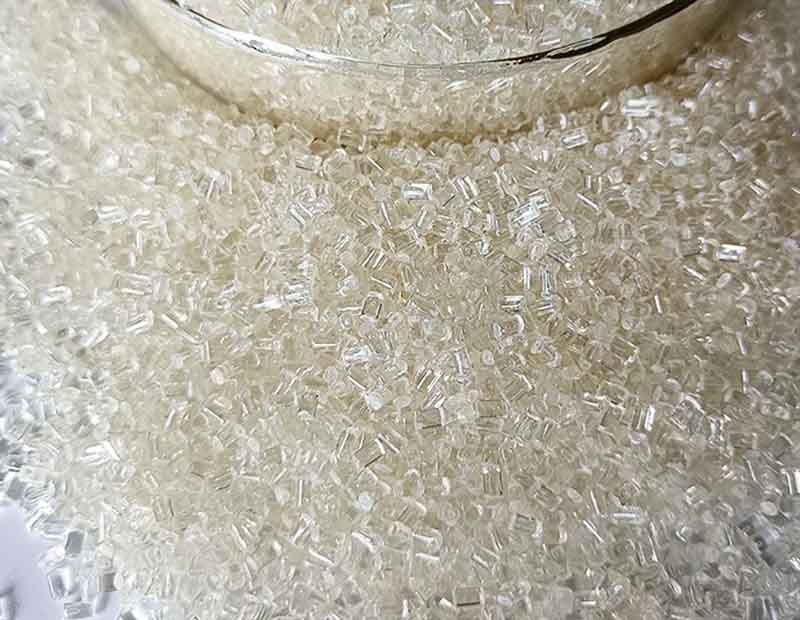
What Is Polysulfone Resin?
Polysulfone Resin is an engineering thermoplastic containing aromatic sulfone groups in its molecular structure. This structure provides the material with excellent thermal and mechanical properties while maintaining relatively good dimensional stability.
PSU Resin is typically supplied in pellet or resin form for further processing into finished plastic components. It can be processed using conventional thermoplastic manufacturing techniques, depending on the grade and application requirements.
Polysulfone Resin is particularly valuable in applications that require:
High-temperature performance
Dimensional stability
Mechanical strength
Hydrolysis resistance
Electrical insulation
Chemical resistance
Long-term durability
Repeated sterilization capability
Key Properties of Polysulfone Resin Material
Excellent Heat Resistance
Polysulfone Resin Material can maintain its mechanical properties over a wide temperature range. Its high glass transition temperature makes it suitable for applications involving elevated operating temperatures.
This makes PSU Resin a practical option for components exposed to hot fluids, steam, and other thermal environments.
High Dimensional Stability
Polysulfone Resin Materials exhibit good dimensional stability under changing temperature and environmental conditions. This property is important for precision components that require consistent dimensions during long-term operation.
Excellent Hydrolysis Resistance
One of the important advantages of Polysulfone Resin is its resistance to hydrolysis. It can withstand repeated exposure to hot water and steam better than many conventional thermoplastics.
This characteristic makes PSU Resin particularly useful in medical, laboratory, filtration, and fluid-handling applications.
Good Mechanical Strength
PSU Resin offers a useful combination of strength, stiffness, and toughness. It can be used to manufacture structural components that require reliable mechanical performance while maintaining a relatively lightweight design.
Electrical Insulation
Polysulfone Resin provides good electrical insulating properties, making it suitable for electrical and electronic components that require stable insulation performance.
Chemical Resistance
Polysulfone Resin has good resistance to many chemicals and cleaning agents. However, chemical compatibility depends on the specific substance, concentration, temperature, exposure time, and resin grade.
Polysulfone Resin for Medical Devices
Polysulfone Resin for Medical Devices is an important application of this high-performance engineering plastic. Its combination of heat resistance, hydrolysis resistance, dimensional stability, and mechanical strength makes it suitable for various reusable medical and healthcare components.
PSU Resin can be used in applications such as:
Medical instrument components
Surgical equipment components
Sterilization trays
Fluid-handling components
Laboratory equipment
Medical connectors
Housings and structural components
Filtration components
For medical applications, the appropriate resin grade should be selected based on applicable regulatory requirements, sterilization conditions, biocompatibility requirements, and the intended use of the finished component.
Applications of Polysulfone Resin Materials
Medical and Healthcare Equipment
Polysulfone Resin Materials are widely used in medical and healthcare applications because of their thermal stability and resistance to repeated hot-water and steam exposure.
Laboratory Equipment
Laboratory equipment often requires materials that can withstand heat, chemicals, and repeated cleaning. PSU Resin can be used for laboratory components, containers, housings, and fluid-handling parts.
Filtration Systems
Polysulfone-based materials are commonly used in filtration applications. Their chemical and thermal properties make them suitable for components exposed to water, chemicals, and elevated temperatures.
Food Processing Equipment
Polysulfone Resin can be used in selected food-processing applications where heat resistance, dimensional stability, and repeated cleaning are required. Food-contact suitability should be confirmed for the specific resin grade.
Electrical and Electronic Components
Because of its electrical insulation properties and dimensional stability, PSU Resin can be used for electrical components, connectors, insulators, and equipment housings.
Industrial Equipment
Industrial applications may use Polysulfone Resin for pumps, valves, manifolds, fittings, housings, and other components requiring a combination of mechanical and thermal performance.
Advantages of PSU Resin Compared with Conventional Plastics
Polysulfone Resin offers several advantages over many general-purpose plastics when operating conditions become more demanding.
Better High-Temperature Performance
PSU Resin can maintain useful mechanical properties at temperatures where many commodity plastics may soften or lose dimensional stability.
Improved Resistance to Steam and Hot Water
Its hydrolysis resistance makes Polysulfone Resin particularly suitable for applications involving repeated exposure to hot water or steam.
Long-Term Dimensional Stability
For precision components, stable dimensions are essential. Polysulfone Resin provides good dimensional stability under thermal and environmental changes.
Transparent Appearance
Certain grades of Polysulfone Resin are naturally transparent or translucent, which can be beneficial for applications where visual inspection of internal components or fluids is required.
Processing Polysulfone Resin
Polysulfone Resin can be processed using thermoplastic manufacturing methods such as injection molding and extrusion.
Injection Molding
Injection molding is commonly used to manufacture complex PSU components in medium- and high-volume production. Proper drying and processing temperature control are important for achieving consistent part quality.
Extrusion
PSU Resin can also be processed through extrusion to produce sheets, profiles, tubes, and other continuous shaPES.
CNC Machining
Polysulfone semi-finished materials can be machined into customized components using CNC machining. This is useful for prototypes, low-volume production, and precision parts.
How to Choose the Right Polysulfone Resin?
Consider Operating Temperature
The expected operating temperature should be evaluated before selecting a PSU Resin grade. Applications involving continuous heat exposure may require a grade specifically designed for the intended conditions.
Check Chemical Compatibility
Although Polysulfone Resin provides good chemical resistance, it is not resistant to every chemical. Compatibility should be evaluated based on the actual chemical environment.
Consider Sterilization Requirements
For medical and laboratory applications, determine whether the component will be exposed to steam sterilization, hot water, radiation, or other sterilization processes.
Evaluate Mechanical Requirements
Load, impact, stiffness, dimensional accuracy, and long-term mechanical performance should all be considered when selecting Polysulfone Resin Material.
Select the Appropriate Grade
Different Polysulfone Resin Materials may have different properties and certifications. The selected grade should match the intended application and relevant regulatory requirements.
Why Choose Polysulfone Resin Material?
Polysulfone Resin Material provides a strong combination of thermal stability, mechanical strength, hydrolysis resistance, dimensional stability, and electrical insulation.
For applications involving high temperatures, repeated sterilization, hot water, or demanding industrial conditions, PSU Resin can provide a performance advantage over many conventional engineering plastics.
Whether used for medical devices, laboratory equipment, filtration systems, electrical components, or industrial parts, selecting the appropriate Polysulfone Resin grade is essential for achieving reliable long-term performance.
Frequently Asked Questions About Polysulfone Resin
What is Polysulfone Resin?
Polysulfone Resin is a high-performance engineering thermoplastic known for its excellent thermal stability, mechanical strength, dimensional stability, and hydrolysis resistance.
What is PSU Resin?
PSU Resin is the common abbreviation for Polysulfone Resin. It is a High-performance thermoplastic used in medical, industrial, electrical, laboratory, and fluid-handling applications.
What is Polysulfone Resin used for?
Polysulfone Resin is used for medical devices, laboratory equipment, filtration systems, electrical components, food-processing equipment, industrial components, and fluid-handling applications.
Is Polysulfone Resin suitable for medical devices?
Yes, certain grades of Polysulfone Resin are used in medical devices and healthcare equipment. The specific grade must meet the applicable medical, regulatory, and sterilization requirements of the intended application.
Can Polysulfone Resin withstand steam sterilization?
Polysulfone generally has excellent resistance to hot water and steam and is used in applications involving repeated sterilization. The actual sterilization capability depends on the specific resin grade and processing conditions.
Can Polysulfone Resin be CNC machined?
Yes. Polysulfone semi-finished stock can be CNC machined into customized precision components. CNC machining is particularly suitable for prototypes, low-volume production, and complex custom parts.