


Choosing a reliable PSU (Polysulfone) material supplier for a bulk industrial order comes down to five checks: confirming they can supply the right form for your project — rod, sheet, or custom injection-molded part — verifying medical-grade certification if your application requires it, matching PSU's real performance limits to your operating conditions, confirming in-house machining and molding capability rather than relying on a third party, and understanding how order volume affects pricing before you request a quote. A supplier that can't speak clearly to all five is the one that tends to cause delays once you're past the sample stage.
Understand the PSU Form and Grade You Actually Need
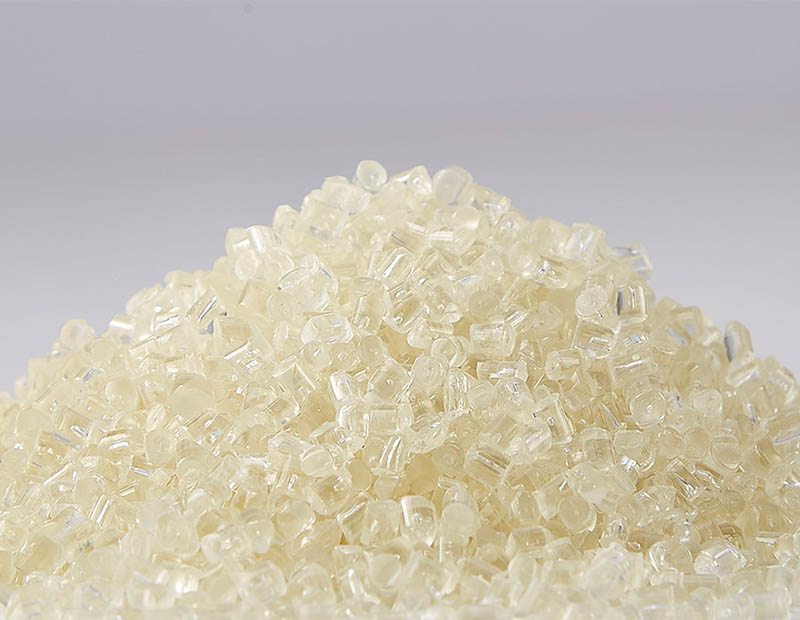
PSU is typically available as rod and sheet stock, raw resin, or custom injection-molded parts. In its natural form it's transparent with an amber tint, though color can be adjusted depending on the supplier's compounding capability. The right starting point depends on your production setup: buyers with in-house molding capacity generally want resin or standard stock, while buyers without machining or molding equipment are better served by a supplier that delivers finished or near-finished parts. Confirm which form your supplier actually stocks and produces regularly, rather than assuming any PSU supplier can deliver any format on request.
Verify Medical-Grade Certification If Your Application Needs It
PSU is widely used in medical devices — surgical instruments, dialyzer housings, and similar applications — because medical-grade variants are available that meet FDA and USP Class VI compliance. This certification is specific to the grade, not the material family as a whole, so ask your supplier directly whether the specific PSU grade you're ordering carries FDA/USP Class VI compliance rather than assuming it applies to their full PSU range. For non-medical applications this may not matter, but for buyers in medical device manufacturing, confirming grade-specific certification before ordering avoids a failed qualification later in your process.
Match PSU's Performance Limits to Your Operating Conditions
PSU offers temperature resistance up to 160°C along with strong chemical and thermal stability, making it a common choice for fluid handling systems such as manifolds, valves, and filters, as well as electronics components like insulators and coil forms, aerospace parts, and laboratory equipment. Its transparency is also a practical advantage in applications where visual inspection of fluid flow matters. Before ordering in bulk, compare your actual operating temperature and chemical exposure against these limits — PSU performs well within its range, but pushing an application past 160°C sustained exposure calls for a higher-temperature material like PEEK rather than PSU.
Confirm Machining, Molding, and Custom Design Capability
Some PSU suppliers sell only raw material or standard stock shaPES, while others offer CNC machining, custom design, and molding services alongside material production, taking a project from prototype through bulk production with flexible minimum order quantities. For buyers who need finished parts rather than raw stock, working with a supplier that handles both material production and fabrication in-house generally shortens lead time and reduces the risk of dimensional issues introduced when material and machining come from separate vendors. If your project requires molded parts specifically, confirm the supplier's molding capability and typical minimum order quantity before requesting a quote, since MOQs for custom molding are usually higher than for standard stock shapes.
Cost Factors to Understand Before You Request a Quote
PSU pricing depends on form, grade, and order volume rather than a single comparable per-unit number. Medical-grade material with FDA/USP Class VI certification typically costs more than standard industrial grade due to the additional testing and documentation involved. Custom molded parts carry tooling and setup costs that standard rod and sheet stock don't, which is why flexible MOQ options matter for buyers who want to prototype before committing to a full production run. Ask suppliers to break down pricing by material grade, form, and any tooling or setup cost separately, rather than comparing a single bundled quote across vendors.
Questions to Ask a PSU Supplier Before Placing a Bulk Order
Do they stock or produce the specific form — rod, sheet, resin, or molded part — your project requires?
Is the specific grade you're ordering FDA/USP Class VI compliant, if your application requires medical-grade material?
Do they offer CNC machining and custom molding in-house, or will you need a separate vendor for fabrication?
What is their minimum order quantity for custom molded parts versus standard stock shapes?
Can they break pricing down by material, form, and tooling/setup cost rather than quoting one bundled figure?
If you already know the form, grade, and quantity you need, send your specifications directly for a quote — suppliers producing and machining PSU under one roof can typically respond with accurate pricing faster than one that needs to coordinate with a separate fabrication partner.
Frequently Asked Questions
What temperature can PSU Material withstand?
PSU typically handles temperatures up to 160°C. For applications requiring higher sustained temperatures, a material like PEEK — rated for continuous use up to 260°C — is generally a better fit than pushing PSU past its practical range.
Is PSU suitable for medical devices?
Yes, medical-grade PSU that meets FDA and USP Class VI compliance is available and commonly used in surgical instruments and dialyzer housings. Confirm that the specific grade you're ordering carries this certification, since it applies at the grade level rather than to all PSU material from a given supplier.
Can PSU be custom molded, or is it only available as rod and sheet stock?
PSU can be custom injection-molded in addition to being supplied as rod and sheet stock. Suppliers that offer both material production and molding in-house can typically take a project from prototype to bulk production with more flexible minimum order quantities than working with separate material and molding vendors.
How is PSU different from PEEK?
PSU is rated for lower continuous temperatures (up to 160°C) compared to PEEK (up to 260°C), and PSU is naturally transparent while PEEK is not. PSU is generally a lower-cost option for applications within its temperature range, while PEEK is chosen when higher heat resistance or mechanical strength is required.