


Choosing a reliable PEEK Material supplier for a bulk industrial order comes down to five checks: confirming they can supply the exact grade and form your application needs — resin, sheet, rod, or machined part — matching PEEK's performance envelope to your real operating conditions, verifying batch-to-batch consistency with actual test data rather than a generic spec sheet, confirming in-house machining capability if you need finished parts rather than raw stock, and understanding cost drivers before you request a quote. A supplier that can't answer these five clearly is usually the one that causes a production delay three months into the relationship, not before the first order ships.
Understand the PEEK Grade and Form You Actually Need
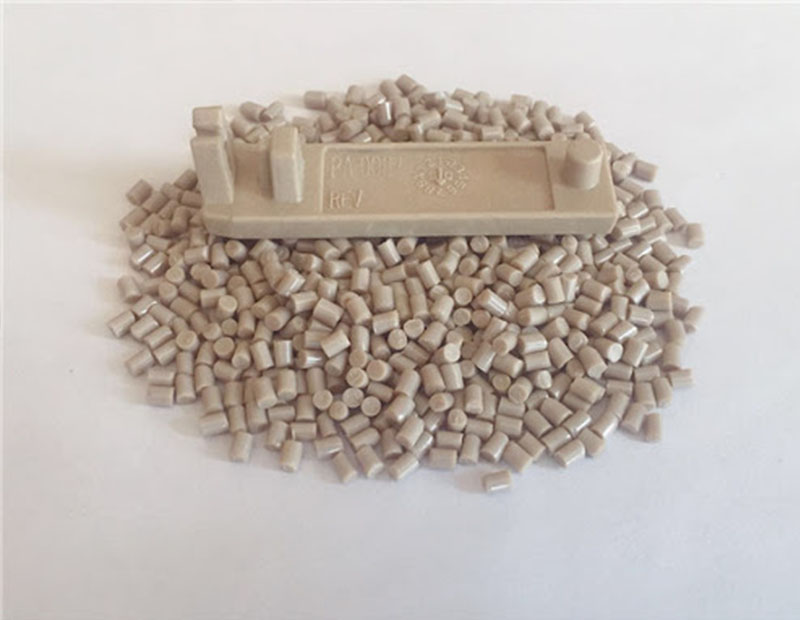
PEEK isn't sold as a single product. Suppliers typically offer raw resin, sheet and rod stock, tubes and films, and fully machined components — plus a choice between natural (virgin) grades, glass- or carbon-fiber-reinforced composite grades for higher stiffness, and ESD-conductive variants for electronics handling. Ordering the wrong form is a common and expensive mistake: buying raw resin when you actually need precision-machined parts means absorbing machining cost and lead time yourself, while buying reinforced grade for an application that needs the material's natural chemical resistance can compromise performance you were relying on. Confirm the exact grade and form with your supplier before requesting pricing, not after.
Match PEEK's Performance Envelope to Your Application
PEEK is chosen over other Engineering Plastics for a specific combination of properties: continuous working temperatures up to 260°C, a melting point of 343°C, short-term exposure tolerance up to 300°C, and a UL94 V-0 flame rating without additives. It also offers high mechanical strength, chemical resistance to acids, bases, and solvents, low friction, sterilization compatibility, and strong electrical insulation. These properties are why PEEK shows up in aerospace structural components, semiconductor processing equipment, medical instruments, automotive parts, electrical insulation systems, and chemical processing equipment. Before ordering in bulk, map your actual operating temperature, chemical exposure, and mechanical load against these numbers rather than assuming any PEEK grade will perform identically — reinforced and ESD grades trade off some of these properties for others.
Why Batch Consistency and Test Data Matter More Than the Spec Sheet
Any supplier can publish a spec sheet listing PEEK's known properties — those numbers describe the material in general, not necessarily the specific batch you're about to receive. For a bulk order, ask for actual test reports or material data sheets tied to the production lot you'll be shipped, not just a generic product page. This matters most for applications where dimensional stability or mechanical performance is safety-critical, such as aerospace or medical components, where a supplier that can't produce batch-level documentation introduces real qualification risk into your supply chain.
Machining and Customization Capability: Raw Material or Finished Parts?
Some PEEK suppliers only sell raw resin or standard sheet and rod stock, leaving all machining to the buyer or a separate vendor. Others, like OEM PEEK processing, offer machining directly from the same supplier producing the base material — sometimes marketed as one-stop or zero-cut processing, where parts are cut and finished to spec rather than shipped as standard stock you cut down yourself. For bulk industrial orders, consolidating material production and machining under one supplier usually reduces lead time and removes a step where dimensional tolerances can be lost between vendors. If your project needs finished components rather than raw stock, confirm in-house machining capability before you commit to a material-only supplier.
Cost Factors to Understand Before You Request a Quote
PEEK pricing varies by form, grade, and order volume rather than following a single per-kilogram number you can compare across suppliers. Reinforced and ESD grades typically cost more than natural resin due to added compounding steps. Machined parts carry additional cost tied to geometry complexity and tolerance requirements, separate from the raw material price. Order volume affects unit pricing more significantly for PEEK than for commodity plastics, since production runs are smaller and setup costs are a larger share of total cost. Rather than comparing a single quoted price across suppliers, ask each one to break down material grade, form, and processing cost separately so you're comparing the same specification.
Questions to Ask a PEEK Supplier Before Placing a Bulk Order
Can they supply the specific grade and form your application requires — natural, reinforced, or ESD — rather than only one standard option?
Will they provide batch-level test data or material certificates with the shipment, not just a general spec sheet?
Do they machine finished parts in-house, or will you need a separate vendor after receiving raw material?
Can they explain how their pricing breaks down by material, form, and processing, rather than quoting a single bundled number?
Do they have experience supplying your specific application — aerospace, medical, semiconductor, or industrial — where qualification requirements differ?
If you already know the grade, form, and quantity you need, reach out directly with your specifications for a quote rather than starting from a general inquiry — suppliers that produce and machine PEEK under one roof can usually respond with accurate pricing faster than one that has to check with a separate machining partner first.
Frequently Asked Questions
What temperature can peek material withstand?
PEEK typically handles continuous working temperatures up to 260°C, with short-term exposure tolerance up to 300°C and a melting point of 343°C. Reinforced grades can shift these numbers slightly, so confirm the exact figures for the specific grade you're ordering.
Should I order PEEK as raw resin or as machined parts?
It depends on whether you have in-house machining capability. If you don't, ordering from a supplier that offers machining alongside raw material production typically reduces lead time and avoids tolerance issues that can occur when material and machining come from separate vendors.
What's the difference between natural PEEK and reinforced PEEK grades?
Natural (virgin) PEEK offers the material's full chemical resistance and is the standard choice for most applications. Glass- or carbon-fiber-reinforced grades add stiffness and dimensional stability for higher-load applications, generally at a higher cost and with some trade-off in chemical resistance. ESD-conductive grades are formulated separately for electronics handling applications.
Why does batch consistency matter for PEEK orders?
A general spec sheet describes PEEK's typical properties, not the specific production lot you'll receive. For applications with safety or qualification requirements — aerospace and medical components in particular — ask for batch-level test data so you can verify the material you're actually receiving meets the properties you're designing around.